Cart 0


St. Maarten and St. Maarten and St. Martin are the kind of islands where you can go from a Dutch-side beach bar to a French bakery in the time it takes to finish a cold drink. The best part is that you do not need your own car to enjoy that freedom. With minibuses, taxis, walkable town centers, and a few fun alternatives, getting around can be simple, budget-friendly, and surprisingly social.
If you are planning your trip through TEAMSXM, it helps to think of transportation as part of the vacation design: pick a home base that matches your style, then mix and match rides depending on the time of day and the vibe you are chasing.
Know the island layout before you pick a ride
St. Maarten and St. Martin share one island, split between the Dutch side (Sint Maarten) and the French side (Saint-Martin). The busiest hubs for visitors tend to be Philipsburg (cruise port and shopping), Simpson Bay (resorts and restaurants), Maho (airport and beach clubs), Marigot (French-side capital and market), and Grand Case (dining and a compact beachfront village).
Distances are not huge, but roads can be hilly and traffic can be slow around the lagoon crossings and during rush times. That makes “how” and “when” you travel almost as important as “where.”
The local minibuses (PSVs) are your best value
St. Maarten’s public transportation is built around semi-public minibuses, often called PSVs. They look like passenger vans, they run popular corridors, and they are the cheapest way to hop between major areas during the day.
A few things surprise first-time riders: there are no official timetables, stops are flexible, and you often pay when you exit. Once you ride one or two times, it clicks.
During daytime, many routes come frequently, often every 10 to 15 minutes on the main lines. Service gets thinner later in the evening, and while buses can run late, it is smart to avoid relying on them for a midnight return.
Here is what makes PSVs work well for visitors:
- They radiate from Philipsburg, with routes that connect to Simpson Bay, Maho, Marigot, French Quarter, and St. Peters.
- You can flag them down along the road, or board at common gathering points near Philipsburg like Emmaplein by the cruise facilities or Clem Labega Square.
- Fares are typically a couple of dollars per segment, paid in cash, and exact change saves time.
If you are heading to Grand Case from Philipsburg, plan on a transfer in Marigot and pay each driver separately. It is still a great deal.
Before your first bus day, it helps to get set up with a few basics:
- Exact small bills: many drivers do not make change
- Offline map: cell coverage is good in many areas, but a saved map keeps things stress-free
- A simple day plan: one or two anchor stops, then explore
- A light layer: buses can feel cool when wet swimsuits meet airflow
- Patience: the island runs on rhythm, not stopwatch timing

How to ride PSVs like a regular
PSVs are generally safe and widely used by locals and visitors. Still, a little etiquette goes a long way, and it makes the ride smoother for everyone.
You typically hail the bus as it approaches, step in quickly, and let the driver know where you are going if it is not obvious from the route sign. When you want to get off, signal with enough notice so the driver can pull in safely.
A few practical habits can improve your experience:
- Keep your bag on your lap and your phone secured, especially if the bus is busy.
- Try to ride major routes earlier in the evening if you are not familiar with the area.
- If you are traveling with lots of luggage, a taxi is usually a better fit than squeezing into a minibus.
Accessibility note: these vans are not designed for wheelchairs and typically do not have lifts.
Taxis cover everything, especially when timing matters
Taxis are the easiest way to go point-to-point on the island, and they are available around the clock at airports, cruise areas, hotels, and popular stands. There are no meters; fares are set by zones, and drivers generally follow the official tables.
Taxis become especially useful in a few situations: airport arrivals, dinner reservations, group outings where you want to split the cost, and late-night rides when bus service is limited.
Keep two timing rules in mind. There is usually a surcharge after 10 pm, and fares can jump again late overnight. If you are going out late, book your return ride ahead of time or at least save a few taxi numbers.
St. Maarten does not have Uber or Lyft. What it does have is a taxi-hailing option: the SXM Taxi app, which connects you with licensed taxi drivers. If you prefer the ride-hailing style of travel, that app is the closest equivalent on the island.

Choosing the right option by scenario
Most travelers end up using a blend. A bus to the beach, a taxi home after dinner, and walking for everything in between feels natural here.
A simple way to decide is to match your ride to your moment:
- Best for beach-hopping on a budget: PSVs
- Best for sunset dinner plans: taxis
- Best for quick local exploring: walking
- Best for active daytime adventures: bike rentals in flatter areas
- Best for island-hopping: ferries from the right ports
That mix keeps costs reasonable without giving up flexibility.
Walking works better than you might expect
Some parts of the island are made for strolling. Philipsburg’s boardwalk and Front Street are easy on foot, and you can pair shopping with a quick swim at Great Bay. Marigot’s waterfront and market area are compact and pleasant. Grand Case is practically designed for a sunset walk that turns into dinner.
Outside of town centers, walking can change quickly from “perfect” to “not worth it.” Sidewalk coverage varies, road shoulders can be narrow, and street lighting gets spotty away from the busiest strips. Plan longer walks for daylight, carry water, and use extra care when crossing bigger roads.
Bicycles are great in the right zones
Biking can be a fun, scenic way to move through flatter areas, especially around Simpson Bay and other coastal stretches. Some rental shops offer hybrid bikes and may provide helmets and locks.
The island’s hills are real, and traffic can move fast. If you are considering a bike day, pick routes that keep you near calmer roads and shorter distances, then combine biking with a taxi ride back if you feel tired.
Bike rental is also a nice “half day” activity: ride in the morning, then switch to buses or taxis when the sun is at its strongest.
Scooters and mopeds: fun, but check the legal side first
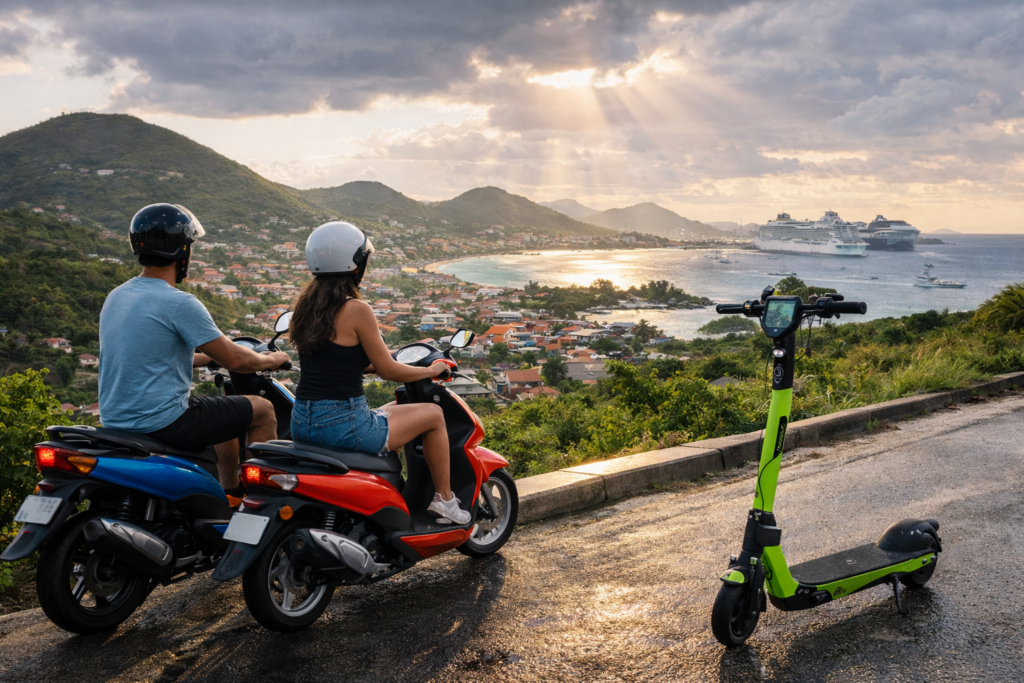
Scooters look like the ultimate island answer, and they can be, but they come with serious requirements. Sint Maarten law requires the proper motorcycle category on your license to operate a scooter, and helmets are mandatory. Road conditions also change with quick rain showers, so comfort and experience matter.
If you do choose a scooter, treat it as a skill-based activity, not a casual substitute for a car. Start on quieter roads, avoid wet conditions, and do not assume other drivers will give you extra space.
There is also an electric scooter-sharing option on the island that works through an app, though availability and coverage can be limited depending on where you are staying.
Use the water when it makes sense
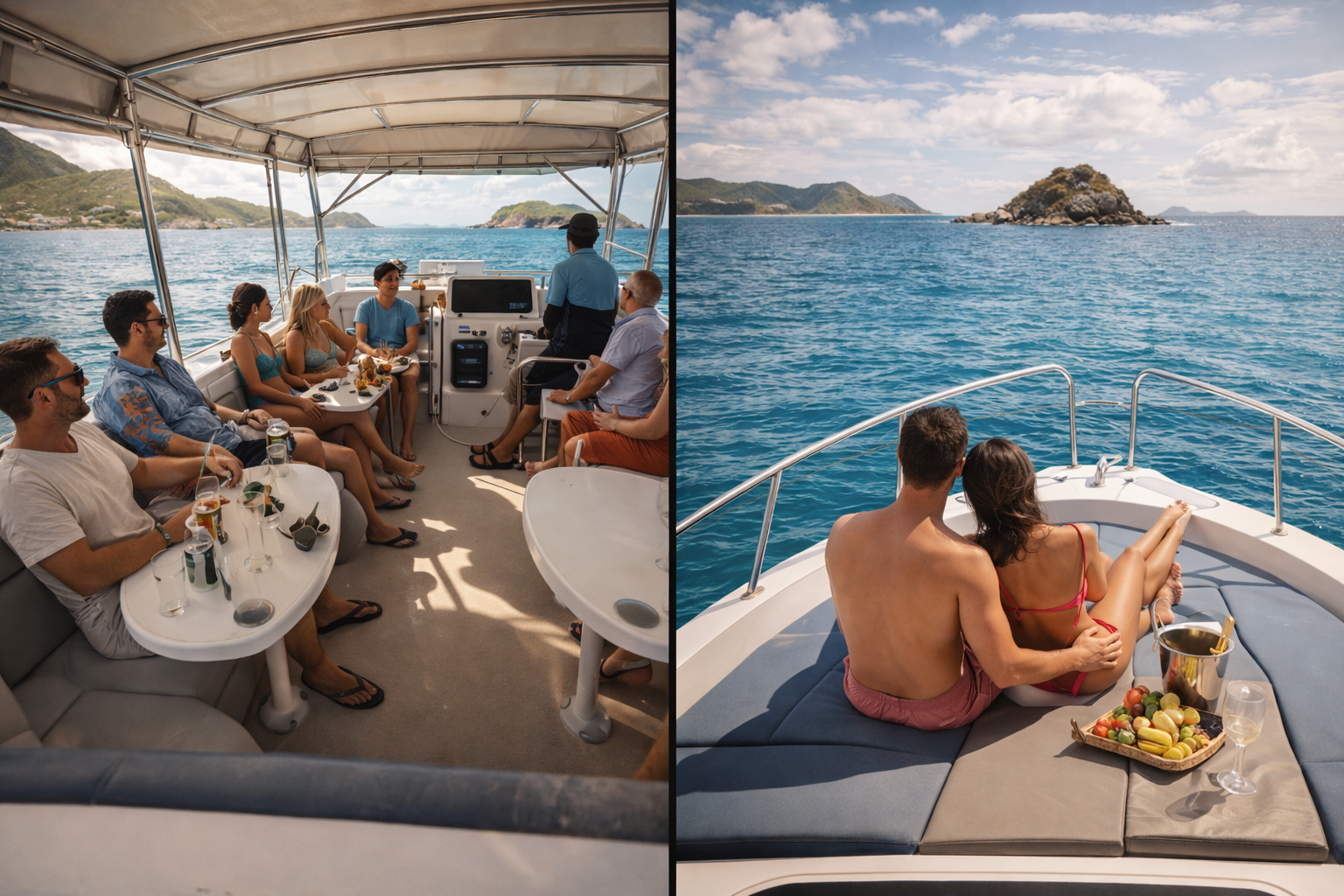
Water taxis around the island are usually charter-style rather than a commuter network, but they can be handy in specific areas and are a memorable way to travel.
The bigger story is ferries: St. Maarten is a launch point for day trips to nearby islands like Anguilla, Saint-Barthélemy, Saba, and St. Eustatius. Schedules depend on the operator and the sea conditions, and sailings can be canceled when weather turns.
If island-hopping is part of your plan, aim for an early departure and keep the day flexible.
Quick comparison table: getting around without a car
| Mode | Typical availability | Best for | Cost feel | Accessibility | Tips |
|---|---|---|---|---|---|
| PSVs (public minibuses) | Roughly early morning to late evening | Budget travel between major towns | Lowest | Limited | Carry exact cash, expect transfers, less frequent late |
| Taxis | 24/7 | Direct rides, luggage, nights out | Higher | Some accessible vehicles exist | Confirm fare before leaving, watch late surcharges |
| SXM Taxi app | 24/7 | Booking licensed taxis by phone | Similar to taxis | Similar to taxis | Great backup when you do not want to hunt for a stand |
| Walking | Anytime | Town centers, boardwalks, beach strips | Free | Mixed | Best in daylight outside the busiest areas |
| Bicycle rental | Daytime shop hours | Flat-ish coastal exploring | Moderate | Not ideal for mobility limits | Pick calmer routes, bring sunscreen and water |
| Scooter rental or sharing | Daytime, app-based options vary | Experienced riders who want independence | Moderate to higher | Not suitable for many mobility needs | License and helmet required, avoid rain-slick roads |
| Ferries | Scheduled, weather-dependent | Day trips off-island | Varies | Limited | Build in buffer time and check sea conditions |
Build an easy no-car itinerary
A no-car trip is easiest when you choose one or two “anchor zones” and let the island come to you.
If you stay near Simpson Bay, Maho, Philipsburg, Marigot, or Grand Case, you can cover a lot with walking plus short rides. Then you can use PSVs for daytime roaming and taxis when you want a guaranteed pickup time.
This approach also pairs well with experiences that include transportation. Many tours meet at central points or can be coordinated with your hotel area, which reduces the number of moving parts.
Here are three simple patterns that work well:
- Beach day pattern: walk to breakfast, PSV to the beach, taxi back after sunset
- Two-town day pattern: PSV to Marigot, connect onward, taxi home if you are tired
- Dinner night pattern: taxi there, taxi back, no guessing about late buses
If you want help shaping those patterns around your hotel, flight times, and must-do experiences, TEAMSXM can coordinate the trip pieces so your transportation feels like part of the vacation, not a separate project.